
For decades, the Rohingya have been discussed primarily through the language of human rights. They have been victims of persecution, statelessness, forced displacement, and mass atrocities. International debate has consequently concentrated on protecting their rights, providing humanitarian assistance, establishing accountability, and eventually securing their safe return to Myanmar.
All these objectives remain essential. But they are no longer sufficient. The departure of Aung Kyaw Moe, the only Rohingya to have held a ministerial-level office in Myanmar’s opposition National Unity Government, should prompt deeper questions about the political future of the Rohingya.
The issue is not simply whether they are adequately represented within the National Unity Government; it is whether Myanmar’s democratic movement continues to conceptualize the Rohingya primarily as a population requiring protection, rather than a political constituency that is entitled to help shape the country’s future. That distinction matters enormously.
Aung Kyaw Moe served as deputy minister for human rights from 2021 until his resignation in July. He has said his departure resulted neither from any political disagreement nor conflict with the National Unity Government leadership, but from his desire to focus more directly on the political representation and rights of the Rohingya. He is now concentrating on strengthening independent Rohingya political institutions.
His departure, therefore, should not simply become another argument about whether Myanmar’s democratic opposition has done enough for the Rohingya. The more important question is why inclusion of the Rohingya has been so closely associated with human rights in the first place.
Human rights are intended to protect individuals against abuses of power. Politics determines who possesses the power. The Rohingya need both.
Myanmar’s opposition has made significant advances from the positions of previous governments on the issue. The National Unity Government has pledged to repeal the discriminatory 1982 Citizenship Law, and stated that the Rohingya are entitled to citizenship. Its policy envisages a federal democratic union in which ethnic groups and citizens enjoy fundamental rights.
These commitments matter, particularly given the long history of political exclusion the Rohingya have suffered from.
But Myanmar’s revolution is now attempting something far more ambitious than simply replacing one government with another. Opposition forces say they want to construct a new federal democratic state.
The Rohingya have been victims of persecution and forced displacement.
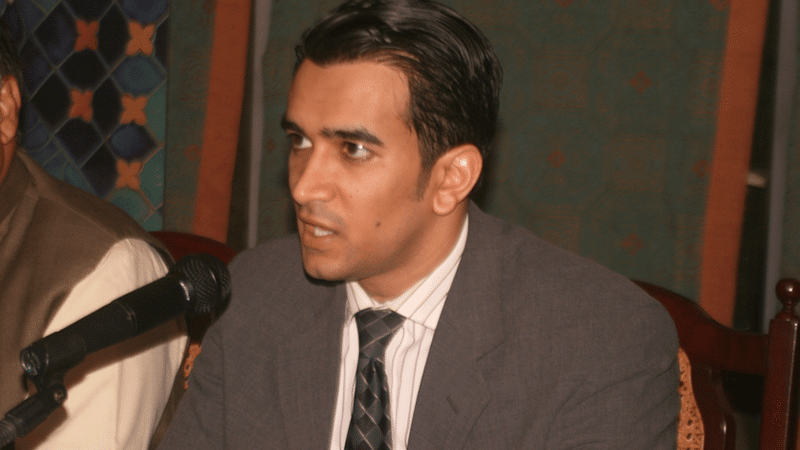
Dr. Azeem Ibrahim
This transforms the Rohingya question. If Myanmar is genuinely being rebuilt, the Rohingya should not merely be asking what protections the new political system will grant them; they should be participating in the process of determining what that political system will actually look like.
Federalism involves decisions about the distribution of authority between the capital and the regions. Constitutional design determines citizenship, representation and political rights. Electoral systems decide whose voices translate into power. Local governance determines who controls schools, policing, land, and public services.
These are political questions, not simply human rights questions. And nowhere are they more consequential than in Rakhine state.
The political landscape there has changed dramatically. The Arakan Army has emerged as the dominant military and administrative power across much of Rakhine, while large numbers of Rohingya remain displaced either inside Myanmar or in Bangladesh.
Any future settlement, therefore, will have to reconcile competing ideas about who belongs in Rakhine, who governs it, and how political power is distributed.
A human rights framework can establish the principle that the Rohingya must not be persecuted. It cannot, by itself, answer the questions of how many representatives the Rohingya should have in political institutions, how they will participate in local government, how displaced Rohingya retain their political rights, or what role they should play in negotiations over the constitutional future of Rakhine.
Those questions require political representation. This is why Aung Kyaw Moe’s decision to focus on the political organization of the Rohingya might ultimately prove more consequential than his ministerial appointment was.
For generations, the Rohingya have largely been objects of other people’s policies. Myanmar’s governments determined their citizenship. The military determined their movement. Bangladesh manages the refugee camps in which many of them now live. International organizations coordinate much of the humanitarian assistance provided to them. Foreign governments debate their repatriation. Armed actors increasingly determine conditions in the territory to which they might someday return.
The Rohingya themselves need greater capacity to negotiate politically with all of them. That requires institutions.
Building credible Rohingya political representation will not be easy. The community is geographically fragmented between Rakhine, Bangladesh, and a growing global diaspora. It contains competing organizations and political perspectives.
Any representative structure would need mechanisms to ensure legitimacy and meaningful participation by women, younger generations, refugees, and those still living inside Myanmar.
But those difficulties strengthen rather than weaken the case for political organization. Other ethnic communities in Myanmar spent decades building political parties, armed organizations, civil society institutions, and administrative structures through which they could articulate collective demands. The Rohingya require political infrastructure of their own.
There is also a wider lesson for Myanmar’s democratic revolution: Revolutionary movements are usually judged by the political systems they promise to create after victory. They should also be judged on how they distribute political power before they win.
Myanmar’s opposition has committed itself to federalism, equality, and an end to military domination. A draft framework for federal transitional arrangements was unveiled as recently as July, illustrating that debates about the architecture of a post-military Myanmar are already occurring.
The Rohingya cannot be invited into that conversation after the fundamental decisions have already been made. Their inclusion needs to begin during the design process itself.
This does not diminish the importance of human rights institutions. Indeed, the National Unity Government has just dissolved its Human Rights Ministry as it moves toward establishing an independent Union Human Rights Commission, potentially separating the oversight of rights from executive government.
That institutional transition makes the distinction particularly timely. Human rights bodies should protect Rohingya rights just as they protect the rights of everyone in Myanmar.
But Rohingya political participation belongs somewhere else: at the tables where the decisions about federalism, citizenship, constitutional arrangements, and the distribution of power are actually made.
There is an important conceptual difference between simply protecting a minority and sharing power with it. The former asks the state to behave fairly toward a vulnerable population. The latter recognizes that population as one of the constituencies from which the state itself derives legitimacy.
After everything the Rohingya have endured, restoration of their rights is the minimum any future democratic Myanmar should provide. The greater test is whether they are given meaningful political agency.
Myanmar’s democratic revolution promises to build a fundamentally different country from the one that produced decades of military rule, ethnic conflict and, ultimately, the Rohingya catastrophe.
If that promise is genuine, the Rohingya cannot simply have a place in its human rights policy; they need a place in its politics.
• Dr. Azeem Ibrahim is the director of special initiatives at the New Lines Institute for Strategy and Policy in Washington.